The Biggest Semi Truck In The World: A Deep Dive into Engineering Giants
The world of trucking is constantly evolving, with innovations pushing the boundaries of size, power, and efficiency. While the term "semi-truck" typically conjures images of standard 18-wheelers, the reality is that some semi-trucks dwarf their counterparts in both scale and capability. These colossal machines are not your everyday highway haulers; they are specialized vehicles designed for extreme tasks in demanding environments. This article explores the biggest semi-trucks in the world, delving into their unique features, applications, and the engineering marvels that make them possible.
The Biggest Semi Truck In The World
What Defines "Biggest"? Dimensions, Weight, and Power
Before we jump into specific models, it's crucial to define what we mean by "biggest." Size isn't the only factor. We'll consider:
- Dimensions: Overall length, width, and height.
- Weight: Gross Vehicle Weight Rating (GVWR) – the maximum operating weight a vehicle is allowed to have.
- Power: Engine horsepower and torque, crucial for hauling massive loads.
- Application: The specific tasks these trucks are designed to perform.

A truck might be incredibly long but relatively light, or it might be shorter but capable of carrying an immense load. The "biggest" semi-truck often represents a combination of these factors, tailored to its intended purpose.
The Liebherr T 284: A Mining Titan
When it comes to sheer size and hauling capacity, the Liebherr T 284 stands out as a true giant. While technically a mining truck and not strictly a "semi-truck" in the highway sense, its immense size and powerful engine make it a worthy contender for the title of "biggest."
- Dimensions: The T 284 boasts impressive dimensions, with a length exceeding 47.4 feet (14.4 meters), a width of 24.7 feet (7.5 meters), and a height of 24.1 feet (7.4 meters).
- Weight: This behemoth has an empty weight of approximately 261 tons (237 metric tons) and a payload capacity of up to 400 tons (363 metric tons). The Gross Vehicle Weight (GVW) can reach a staggering 661 tons (600 metric tons).
- Power: Powered by a massive 20-cylinder diesel engine, the T 284 generates an astounding 4,023 horsepower (3,000 kW).
- Application: Primarily used in large-scale mining operations, the T 284 is designed to transport massive quantities of ore and other materials.
Engineering Marvels of the Liebherr T 284

The T 284 isn't just big; it's a marvel of engineering. Some key features include:
- AC Electric Drive System: Instead of a traditional mechanical transmission, the T 284 uses an AC electric drive system. The diesel engine powers an alternator, which generates electricity to drive electric motors at each wheel. This provides superior torque and control, especially when hauling heavy loads uphill.
- Advanced Suspension System: To handle the immense weight and rough terrain, the T 284 features a robust suspension system with hydraulic cylinders and nitrogen accumulators. This system absorbs shocks and vibrations, providing a smoother ride for the operator and reducing stress on the vehicle's components.
- High-Strength Steel Construction: The T 284 is built with high-strength steel to withstand the stresses of continuous heavy-duty operation. The frame and body are designed to resist cracking and fatigue, ensuring a long service life.
- Advanced Control Systems: The T 284 is equipped with advanced control systems that monitor engine performance, wheel speed, and other critical parameters. These systems help optimize fuel efficiency, prevent component damage, and enhance safety.
Terex/Bucyrus MT6300AC: Another Mining Giant
Another contender for the title of "biggest" is the Terex/Bucyrus MT6300AC (now part of Caterpillar). This ultra-class mining truck shares many similarities with the Liebherr T 284 in terms of size, power, and application.
- Dimensions: The MT6300AC measures approximately 47.7 feet (14.5 meters) in length, 25 feet (7.6 meters) in width, and 26 feet (7.9 meters) in height.
- Weight: It has an empty weight of around 236 tons (214 metric tons) and a payload capacity of up to 400 tons (363 metric tons).
- Power: The MT6300AC is powered by a 20-cylinder diesel engine that produces up to 3,750 horsepower (2,800 kW).
- Application: Like the Liebherr T 284, the MT6300AC is primarily used in large-scale mining operations to transport ore and other materials.
Oversized Load Trucks: Hauling the Impossible
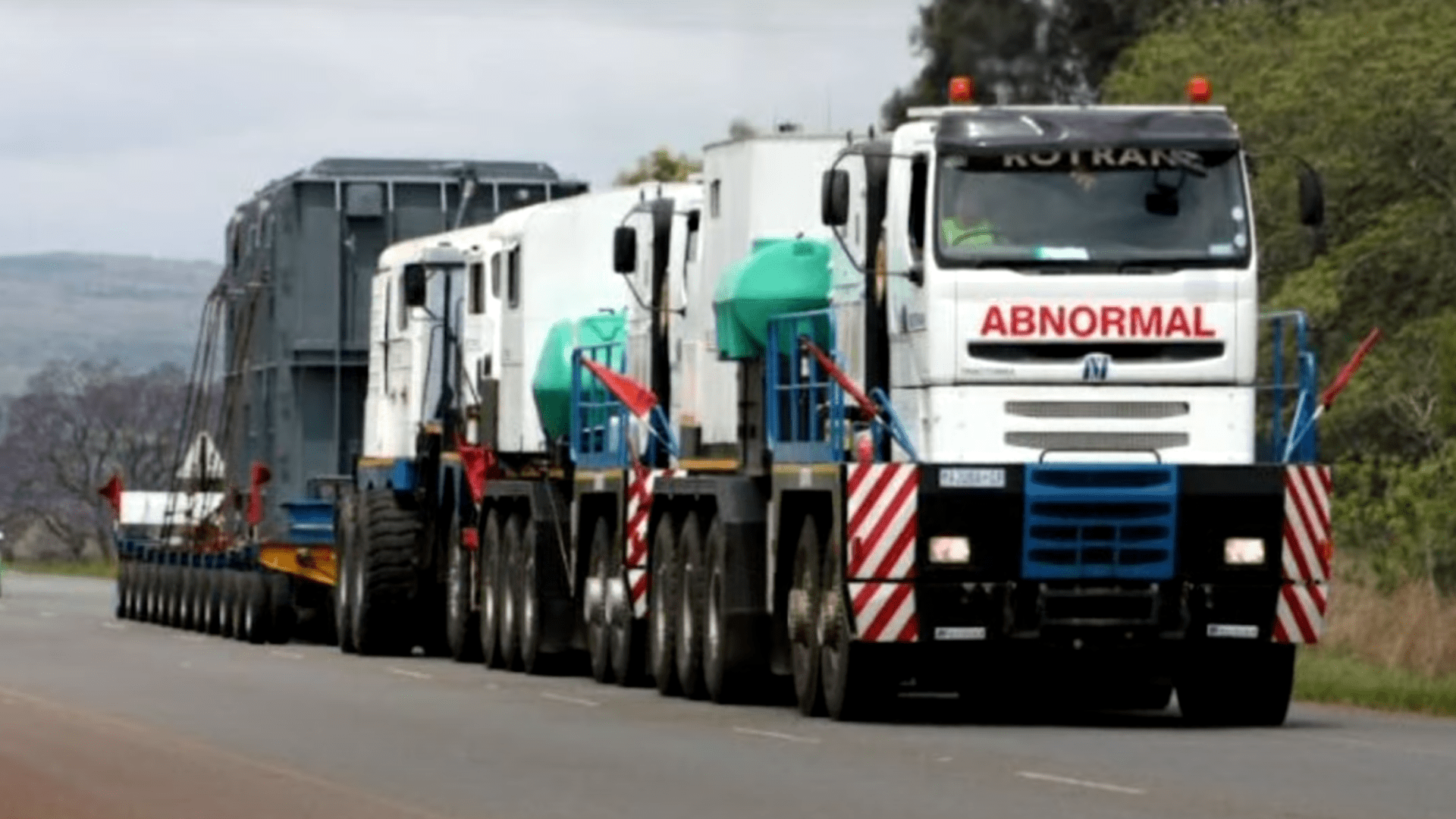
While mining trucks dominate the extreme size category, there's another class of semi-trucks designed for hauling exceptionally large and heavy loads on public roads. These are often referred to as "oversized load trucks" or "heavy haul trucks."
These trucks are used to transport:
- Construction equipment: Large excavators, bulldozers, and cranes.
- Industrial machinery: Generators, turbines, and transformers.
- Pre-fabricated structures: Bridge sections, building modules, and wind turbine components.
Features of Oversized Load Trucks
Oversized load trucks are specifically designed to handle the challenges of transporting massive objects on public roads. Key features include:
- Multi-Axle Configurations: To distribute the weight of the load, these trucks often have multiple axles, sometimes exceeding 20 or more. This reduces the stress on the road surface and allows for higher weight limits.
- Powerful Engines: Oversized load trucks are equipped with high-horsepower engines to provide the necessary torque for pulling heavy loads uphill and maintaining speed on highways.
- Specialized Trailers: These trucks use specialized trailers designed to accommodate oversized and overweight cargo. These trailers may have adjustable widths, lengths, and heights to fit the specific dimensions of the load.
- Permits and Escorts: Transporting oversized loads requires special permits from transportation authorities. These permits specify the route, time of day, and other restrictions to ensure safety and minimize traffic disruption. Oversized loads are often escorted by pilot vehicles to warn other drivers and ensure the load clears obstacles such as bridges and overpasses.
The Nicolas Tractomas TR 10x10 D100: A Desert Powerhouse
The Nicolas Tractomas TR 10x10 D100 is a truly unique example of an oversized load truck. Built to operate in the harsh conditions of the Sahara Desert, this truck is designed to transport massive electrical transformers.
- Dimensions: This truck is known for its massive size, though exact dimensions can vary depending on the configuration. It's significantly larger than a standard semi-truck.
- Weight: The Tractomas TR 10x10 D100 is designed to haul loads weighing up to 900 tons (816 metric tons).
- Power: Powered by a Caterpillar diesel engine producing over 1,000 horsepower, this truck has the muscle to tackle the demanding terrain and heavy loads of the Sahara.
- Application: Transporting heavy electrical transformers across the Sahara Desert for power grid infrastructure projects.
Why Are These Trucks So Big? The Economics and Logistics
The existence of these colossal trucks raises a crucial question: why not use multiple smaller trucks instead? The answer lies in a combination of economics, logistics, and engineering.
- Cost Efficiency: In some cases, transporting a large load with a single oversized truck can be more cost-effective than using multiple smaller trucks. This reduces the number of drivers, fuel consumption, and permit fees.
- Time Savings: Transporting a large load with a single truck can also save time compared to using multiple smaller trucks. This is especially important for time-sensitive projects.
- Engineering Feasibility: For certain types of cargo, such as very large industrial components, it may not be feasible to disassemble them into smaller pieces for transport. In these cases, an oversized truck is the only option.
Challenges and Considerations
Operating these massive trucks presents significant challenges:
- Infrastructure Limitations: Many roads and bridges are not designed to handle the weight and dimensions of oversized loads. This requires careful route planning and, in some cases, infrastructure modifications.
- Safety Concerns: Transporting oversized loads poses safety risks to other drivers and pedestrians. This requires strict adherence to safety regulations and the use of experienced drivers and escorts.
- Environmental Impact: Large trucks consume significant amounts of fuel and emit pollutants. Efforts are being made to develop more fuel-efficient and environmentally friendly oversized load trucks.
The Future of Oversized Trucking
The demand for oversized trucking is likely to continue growing as infrastructure projects become larger and more complex. Future trends in this industry include:
- Electric and Hybrid Power: Development of electric and hybrid powertrains for oversized trucks to reduce emissions and improve fuel efficiency.
- Autonomous Driving: Integration of autonomous driving technology to improve safety and efficiency.
- Advanced Materials: Use of lightweight materials to reduce the weight of the truck and increase payload capacity.
- Improved Route Planning: Development of advanced route planning tools that take into account infrastructure limitations and traffic conditions.
Based on my experience... dealing with logistics, I've seen firsthand the critical role these massive trucks play in various industries. They are not just about brute force; they represent innovative engineering and logistical planning.
Pro tips from us... When considering oversized transport, always prioritize detailed route surveys and communication with local authorities. This ensures a smooth and safe operation.
Common mistakes to avoid are... neglecting to properly secure the load or failing to account for overhead clearances. These oversights can lead to costly delays and dangerous situations.
Conclusion: Giants of the Road and Beyond
The biggest semi-trucks in the world are more than just large vehicles; they are testaments to human ingenuity and engineering prowess. From the colossal mining trucks that extract resources from the earth to the specialized haulers that transport massive objects across continents, these machines play a crucial role in our modern world. As technology advances and infrastructure demands evolve, we can expect to see even more innovative and impressive oversized trucks in the future. They stand as a reminder that even the most seemingly impossible tasks can be accomplished with the right combination of engineering, planning, and sheer determination. The world of trucking is constantly evolving, and these giants are leading the charge.
External Link to Caterpillar Mining Trucks
Internal Link to a related article (example): Check out our article on "The Evolution of Trucking Technology" for a broader look at the innovations shaping the industry.