Understanding the capacity of a dump truck is crucial for anyone involved in construction, landscaping, or home renovation projects. Whether you're hauling away debris, delivering gravel, or transporting soil, knowing how many yards a dump truck can hold will help you plan efficiently and avoid costly mistakes. In this comprehensive guide, we'll delve into the different types of dump trucks, their capacities, and the factors that influence how much material they can carry. We'll also provide practical tips and insights to help you make informed decisions for your next project.
Why Knowing Dump Truck Capacity Matters
How Many Yards in a Dump Truck: A Comprehensive Guide for Homeowners and Professionals
Before diving into the specifics, let's understand why knowing dump truck capacity is so important.
- Accurate Material Ordering: Ordering the right amount of materials is essential for staying on budget and avoiding project delays. Knowing how many trips a dump truck can make with the required material ensures that you don't over- or under-order.
- Efficient Project Planning: Efficient planning is important to ensure that your project runs smoothly. It includes estimating how long it will take to transport materials and remove debris. Dump truck capacity directly impacts these timelines.
- Cost Management: Transportation costs can significantly impact your overall budget. By understanding dump truck capacity, you can optimize your hauling strategy and minimize transportation expenses.
- Compliance and Safety: Overloading a dump truck can lead to safety hazards and legal penalties. Understanding weight limits and capacity helps you ensure compliance and maintain a safe working environment.
Types of Dump Trucks and Their Capacities
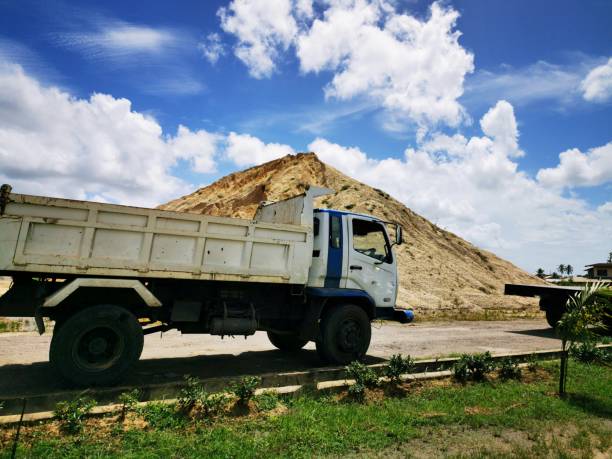
Dump trucks come in various sizes and configurations, each designed for specific tasks. Here's a rundown of the most common types and their typical capacities:
- Standard Dump Truck: This is the most common type of dump truck, often seen on construction sites and roadways. Standard dump trucks typically have a single rear axle and a box-shaped bed that can be raised to dump materials.
- Tandem Axle Dump Truck: Tandem axle dump trucks have two rear axles, allowing them to carry heavier loads than standard dump trucks.
- Tri-Axle Dump Truck: Tri-axle dump trucks feature three rear axles, providing even greater weight distribution and load-carrying capacity.
- Semi-Trailer Bottom Dump Truck: These trucks consist of a tractor unit and a semi-trailer with a bottom-dump gate. They are ideal for spreading materials evenly over a large area.
- Semi-Trailer End Dump Truck: Similar to bottom dump trucks, semi-trailer end dump trucks have a trailer that can be raised to dump materials from the rear.
- Transfer Dump Truck: Transfer dump trucks consist of a standard dump truck pulling a separate trailer. The trailer can be unloaded into the main truck bed, allowing for larger loads and greater flexibility.

Typical Dump Truck Capacities
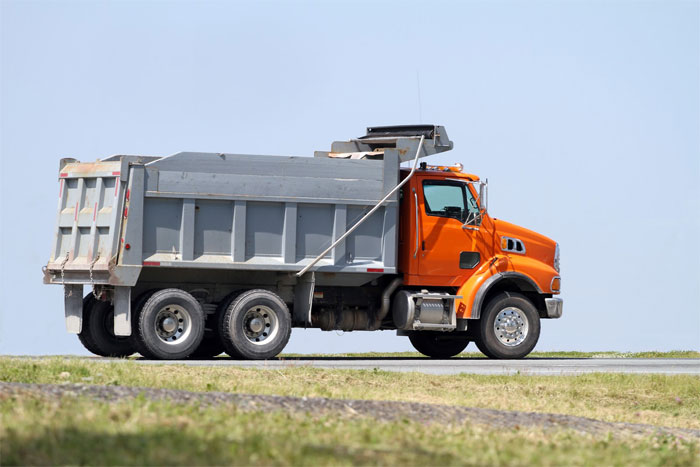
| Type of Dump Truck | Cubic Yard Capacity (Approximate) | Weight Capacity (Approximate) |
|---|---|---|
| Standard Dump Truck | 10-14 | 10-14 tons |
| Tandem Axle Dump Truck | 12-18 | 14-18 tons |
| Tri-Axle Dump Truck | 15-20 | 18-25 tons |
| Semi-Trailer Bottom Dump Truck | 22-25 | 25-30 tons |
| Semi-Trailer End Dump Truck | 20-25 | 25-30 tons |
| Transfer Dump Truck | 25-30 (combined) | 30-40 tons (combined) |
Factors Affecting Dump Truck Capacity
While the table above provides a general guideline, several factors can influence the actual capacity of a dump truck:
- Material Density: The density of the material being hauled is a critical factor. Denser materials, such as gravel or wet soil, will weigh more per cubic yard than lighter materials like mulch or dry leaves. Always consider the material's weight to avoid overloading the truck, even if the volume seems within the stated capacity.
- Truck Bed Dimensions: The dimensions of the dump truck bed directly impact its volume capacity. A longer, wider, and deeper bed can hold more material.
- Weight Restrictions: Local and state regulations impose weight restrictions on vehicles traveling on public roads. These restrictions limit the maximum weight a dump truck can carry, regardless of its theoretical capacity. Exceeding these limits can result in fines and penalties.
- Truck Condition and Maintenance: The condition of the dump truck, including its suspension and tires, can affect its load-carrying capacity. Regular maintenance and inspections are essential to ensure the truck can safely handle its maximum load.
- Loading Method: How the material is loaded into the dump truck can also affect the amount it can carry. Uneven loading or overfilling can lead to spillage and safety hazards.
Calculating Dump Truck Capacity
Calculating the capacity of a dump truck involves understanding the relationship between volume, weight, and material density. Here's a step-by-step guide:
- Determine the Truck Bed Volume: Measure the length, width, and height of the dump truck bed in feet. Multiply these dimensions to find the volume in cubic feet.
- Convert Cubic Feet to Cubic Yards: Since dump truck capacity is typically measured in cubic yards, divide the volume in cubic feet by 27 (since 1 cubic yard = 27 cubic feet).
- Determine the Material Density: Find the density of the material you'll be hauling. This information is often available from suppliers or online resources. Density is typically expressed in pounds per cubic foot (lbs/ft³) or pounds per cubic yard (lbs/yd³).
- Calculate the Weight of the Load: Multiply the volume of the truck bed in cubic yards by the material density in pounds per cubic yard to find the total weight of the load.
- Compare to Weight Restrictions: Ensure that the calculated weight of the load does not exceed the dump truck's weight capacity or any applicable weight restrictions.
Example Calculation
Let's say you have a standard dump truck with a bed that measures 12 feet long, 8 feet wide, and 4 feet high. You plan to haul gravel, which has a density of 2800 pounds per cubic yard.
- Truck Bed Volume: 12 ft x 8 ft x 4 ft = 384 cubic feet
- Convert to Cubic Yards: 384 cubic feet / 27 = 14.22 cubic yards
- Material Density: 2800 lbs/yd³
- Weight of Load: 14.22 cubic yards x 2800 lbs/yd³ = 39,816 pounds
- Convert Pounds to Tons: 39,816 pounds / 2000 = 19.91 tons
In this example, the dump truck can theoretically hold 14.22 cubic yards of gravel. However, the weight of the load is approximately 19.91 tons, which may exceed the truck's weight capacity or local weight restrictions. You may need to reduce the volume of gravel to stay within the legal and safe weight limits.
Pro tips from us: Always overestimate the material required for your project by a small percentage (5-10%) to account for settling, spillage, and unforeseen circumstances.
Common Mistakes to Avoid
- Overloading the Dump Truck: Overloading is one of the most common mistakes. It can damage the truck, create safety hazards, and result in fines.
- Ignoring Material Density: Failing to consider the density of the material can lead to overloading, even if the volume seems within the truck's capacity.
- Neglecting Weight Restrictions: Ignoring local and state weight restrictions can result in legal penalties and delays.
- Improper Loading: Uneven loading can destabilize the truck and increase the risk of accidents.
- Skipping Maintenance: Neglecting regular maintenance can compromise the truck's performance and safety.
Real-World Applications
Understanding dump truck capacity is essential in various real-world scenarios:
- Construction: Determining the right size and number of dump trucks needed to haul away demolition debris, deliver concrete, or transport asphalt.
- Landscaping: Calculating the amount of soil, mulch, or gravel needed for a landscaping project and selecting the appropriate dump truck.
- Home Renovation: Estimating the volume of waste generated during a renovation project and arranging for proper disposal using a dump truck.
- Road Maintenance: Planning the delivery of asphalt or gravel for road repairs and ensuring that the dump trucks are properly loaded and compliant with weight restrictions.
- Disaster Relief: Coordinating the removal of debris and the delivery of essential supplies using dump trucks in the aftermath of a natural disaster.
Renting vs. Hiring a Dump Truck Service
When it comes to hauling materials, you have two main options: renting a dump truck and doing it yourself, or hiring a professional dump truck service. Here's a comparison to help you decide which option is best for your needs:
Renting a Dump Truck:
-
Pros:
- Cost Savings: Renting can be more cost-effective for smaller projects or if you have experience operating heavy machinery.
- Flexibility: You have full control over the schedule and can work at your own pace.
-
Cons:
- Responsibility: You are responsible for operating the truck safely, loading and unloading materials, and complying with all regulations.
- Insurance and Licensing: You may need to obtain special insurance and licensing to operate a dump truck legally.
- Maintenance: You are typically responsible for basic maintenance and repairs during the rental period.
- Experience Required: Operating a dump truck requires skill and experience.
Hiring a Dump Truck Service:
-
Pros:
- Convenience: The service handles all aspects of the hauling process, including loading, transportation, and disposal.
- Expertise: Professional drivers have the experience and training to operate dump trucks safely and efficiently.
- Compliance: The service is responsible for complying with all regulations and weight restrictions.
- Insurance and Licensing: The service provides all necessary insurance and licensing.
-
Cons:
- Higher Cost: Hiring a service is typically more expensive than renting a dump truck.
- Less Control: You have less control over the schedule and may need to coordinate with the service provider.
Based on my experience: For most homeowners and small-scale projects, hiring a dump truck service is the more practical and cost-effective option. The convenience, expertise, and compliance benefits outweigh the higher cost. However, if you have experience operating heavy machinery and are comfortable with the responsibilities, renting a dump truck may be a viable option.
Conclusion
Understanding how many yards a dump truck can hold is essential for efficient project planning, cost management, and safety compliance. By considering the type of dump truck, material density, weight restrictions, and other factors, you can accurately estimate your hauling needs and make informed decisions. Whether you choose to rent a dump truck or hire a professional service, this comprehensive guide will help you navigate the complexities of dump truck capacity and ensure the success of your next project.
External Link: Example of Dump Truck Capacity Chart
[Internal Link: Related article on cost estimation for construction projects (if available)]
[Internal Link: Another related article on safety tips for operating heavy machinery (if available)]