Moving can be a daunting task. One of the biggest challenges is figuring out what size truck you'll need. Renting too small a truck means multiple trips. Renting too big a truck means wasted money and fuel. Thankfully, Penske offers a helpful tool: the Penske Truck Size Estimator.
In this comprehensive guide, we'll dive deep into how to effectively use the Penske Truck Size Estimator. We'll cover everything from understanding its features to interpreting the results. I'll also share some pro tips based on my experience to ensure you choose the right truck size for a smooth and efficient move. This guide will give you the knowledge and confidence to make the best decision for your specific needs.
The Ultimate Guide to Using the Penske Truck Size Estimator: Finding the Perfect Fit for Your Move
Why Truck Size Matters: More Than Just Cubic Feet
Before we delve into the estimator itself, let's discuss why selecting the correct truck size is so crucial. It's not just about the cubic footage. It's about efficiency, cost-effectiveness, and, most importantly, safety.
-
Efficiency: The right size minimizes the number of trips. This saves time, energy, and stress. Imagine having to leave half your belongings behind on the first trip. Then having to return for a second round. Proper planning can help you avoid this.
-
Cost-Effectiveness: Renting a larger truck than needed means paying for unused space. This also leads to higher fuel consumption. Selecting the appropriate size optimizes your budget.
-
Safety: Overloading a truck is dangerous. It can affect braking and handling. It can also lead to accidents. Choosing a truck that can safely accommodate your belongings is paramount.

Demystifying the Penske Truck Size Estimator: A Step-by-Step Guide
The Penske Truck Size Estimator is designed to simplify the process of determining the right truck size. It uses a combination of factors to provide a recommendation. Here's a step-by-step guide on how to use it effectively:
-
Access the Estimator: Navigate to the Penske website and locate the Truck Size Estimator tool. It's usually found in the "Moving Resources" or "Truck Rental" section.
-
Input Your Home Size: The estimator typically starts by asking for the size of your home (e.g., studio apartment, 1-bedroom apartment, 2-bedroom house, etc.). Select the option that best matches your current living situation.
-
Specify the Number of Rooms: Even within the same home size category, the amount of belongings can vary significantly. The estimator may ask you to specify the number of rooms you need to move. This provides a more accurate assessment.
-
Provide Additional Details (Optional): Some estimators offer the option to provide more specific details. This may include the number of large appliances, furniture items, and boxes you plan to move. The more information you provide, the more accurate the estimate will be.
-
Review the Recommendation: Once you've entered all the necessary information, the estimator will provide a truck size recommendation. This recommendation will typically include the suggested truck size. It will also have an estimated cargo capacity.
-
Consider Additional Factors: The estimator's recommendation is a good starting point. However, it's essential to consider additional factors that may influence your truck size needs. We'll discuss these factors in more detail later in this guide.
Understanding the Different Penske Truck Sizes: A Comprehensive Overview
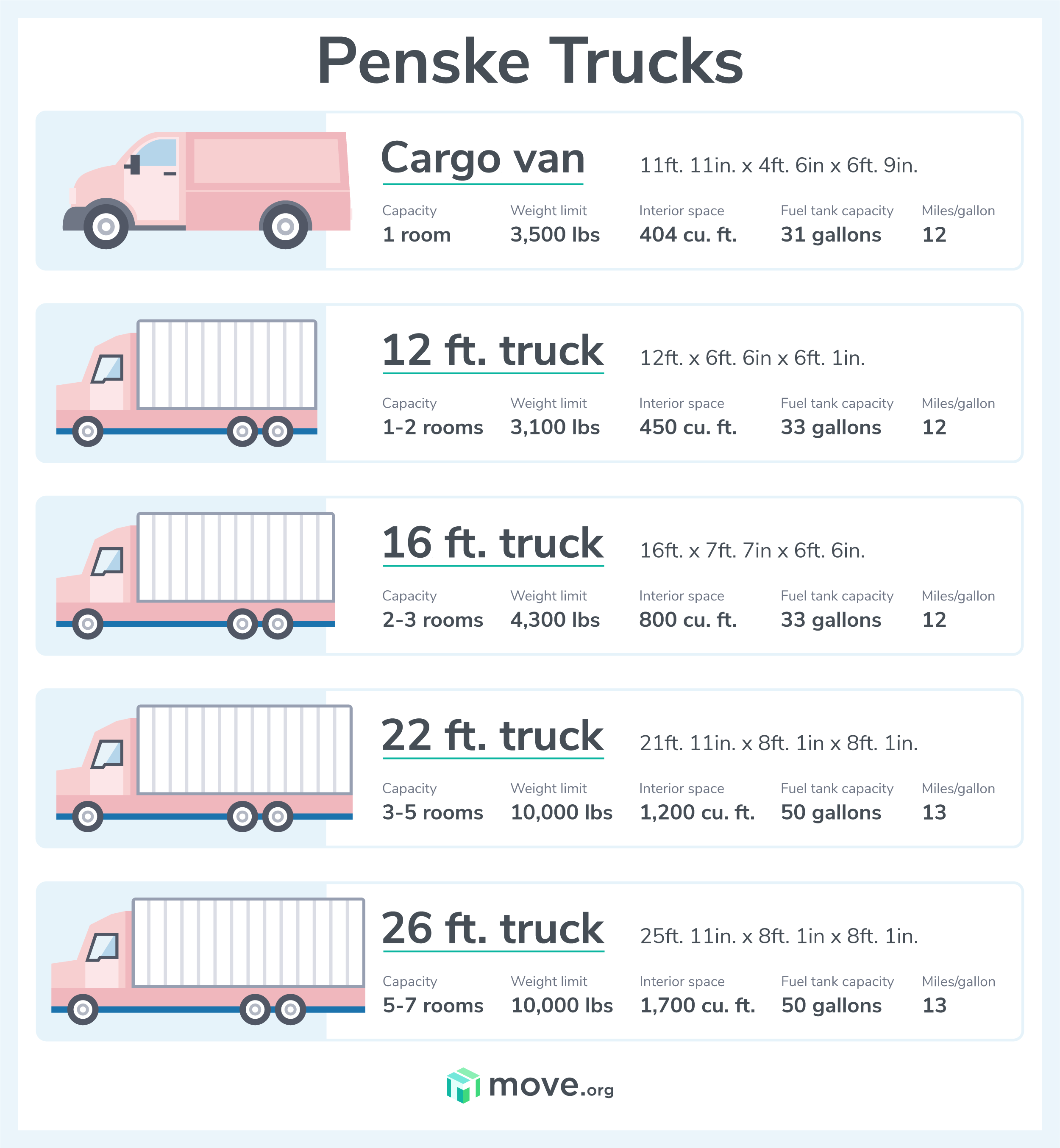
Penske offers a range of truck sizes to accommodate various moving needs. Understanding the dimensions and cargo capacities of each truck size is essential for making an informed decision. Here's an overview of the most common Penske truck sizes:
-
12-Foot Truck: This is the smallest truck in the Penske fleet. It's ideal for moving the contents of a studio apartment or a small one-bedroom apartment. The 12-foot truck typically has a cargo capacity of around 450 cubic feet. It can usually accommodate a few pieces of furniture, several boxes, and small appliances.
-
16-Foot Truck: A 16-foot truck is suitable for moving the contents of a one-bedroom apartment or a small two-bedroom apartment. It offers more cargo space than the 12-foot truck. The 16-foot truck typically has a cargo capacity of around 800 cubic feet.
-
22-Foot Truck: This truck is a popular choice for moving the contents of a two-bedroom house or a three-bedroom apartment. It provides ample cargo space for furniture, appliances, and boxes. The 22-foot truck typically has a cargo capacity of around 1,200 cubic feet.
-
26-Foot Truck: The 26-foot truck is the largest truck in the Penske fleet. It's designed for moving the contents of a three-bedroom house or a larger property. It offers the most cargo space. The 26-foot truck typically has a cargo capacity of around 1,700 cubic feet.
Beyond the Estimator: Essential Factors to Consider
While the Penske Truck Size Estimator is a valuable tool, it's crucial to remember that it's just an estimate. Several other factors can influence the truck size you ultimately need.
-
The Clutter Factor: Are you a minimalist or a maximalist? Do you tend to accumulate belongings over time? If you have a lot of clutter, you'll likely need a larger truck than the estimator suggests. Pro tip from us: be realistic about your belongings. Don't underestimate the amount of stuff you own.
-
The Furniture Factor: Large, bulky furniture items can take up a significant amount of space in a moving truck. If you have a lot of heavy furniture, you'll need a truck that can accommodate it. Measure your largest furniture pieces to get a better sense of how much space they'll occupy.
-
The Appliance Factor: Appliances like refrigerators, washing machines, and dryers can be bulky and heavy. If you're moving these items, you'll need a truck that can handle their weight and size.
-
The Box Factor: The number of boxes you have can significantly impact the truck size you need. A good estimate is to count the number of boxes and add 10-20% for items that may not be packed yet.
-
The Stairs Factor: Moving belongings up or down stairs can be challenging. It can also require more time and effort. If you have stairs at either your origin or destination, you may want to consider a slightly larger truck. This allows you to move fewer items per trip.
-
The Distance Factor: If you're moving a long distance, you may want to opt for a slightly larger truck. This ensures you have enough space for all your belongings. It also reduces the risk of needing to make multiple trips.
Pro Tips for Accurate Truck Size Estimation: Maximizing Space and Minimizing Stress
Based on my experience with countless moves, here are some pro tips to help you estimate your truck size needs more accurately:
-
Declutter Before You Estimate: Get rid of anything you don't need or use. This will reduce the amount of stuff you need to move. It makes the estimation process easier. Consider donating, selling, or discarding items.
-
Take Inventory: Create a detailed inventory of all the items you plan to move. This will help you visualize the amount of space you'll need. Categorize items by size and weight.
-
Measure Your Furniture: Measure the dimensions of your largest furniture pieces. This will help you determine how much space they'll occupy in the truck.
-
Use Packing Cubes and Vacuum Bags: Packing cubes and vacuum bags can help you compress clothing and linens. This maximizes space in the truck.
-
Disassemble Furniture When Possible: Disassembling furniture can save space and make it easier to load and unload. Be sure to keep track of all the screws and hardware.
-
Pack Strategically: Pack heavier items at the bottom of boxes and lighter items on top. This will help prevent damage and make it easier to lift the boxes.
-
Rent Moving Equipment: Consider renting moving dollies, furniture pads, and straps. These items can help you move your belongings more safely and efficiently.
Common Mistakes to Avoid: Ensuring a Smooth Moving Experience
Even with careful planning, it's easy to make mistakes when estimating truck size. Here are some common mistakes to avoid:
-
Underestimating the Amount of Stuff You Own: This is the most common mistake. People often underestimate the amount of stuff they have. Be realistic about your belongings.
-
Ignoring Vertical Space: Don't forget to utilize vertical space in the truck. Stack boxes and furniture carefully to maximize space.
-
Failing to Protect Your Belongings: Use furniture pads, blankets, and straps to protect your belongings from damage during transit.
-
Overloading the Truck: Overloading the truck can be dangerous. It can affect braking and handling. Always stay within the truck's weight capacity.
-
Forgetting About Parking: Consider the parking situation at both your origin and destination. Make sure you have enough space to park the truck safely and legally.
Beyond Penske: Exploring Other Truck Rental Options
While Penske is a reputable truck rental company, it's always a good idea to explore other options. Compare prices, truck availability, and customer reviews. Some popular alternatives include:
-
U-Haul: U-Haul is a well-known truck rental company with a wide range of truck sizes and locations.
-
Budget Truck Rental: Budget Truck Rental offers competitive prices and a variety of truck sizes.
-
Enterprise Truck Rental: Enterprise Truck Rental provides truck rentals for both personal and commercial use.
-
Local Moving Companies: Consider hiring a local moving company. This can be a good option if you don't want to drive the truck yourself.
Final Thoughts: Planning Your Move with Confidence
Choosing the right truck size is a critical step in planning a successful move. By using the Penske Truck Size Estimator, considering additional factors, and following the pro tips outlined in this guide, you can estimate your truck size needs accurately. This will help you save time, money, and stress. Remember to declutter, take inventory, and pack strategically. Avoid common mistakes like underestimating the amount of stuff you own.
With careful planning and the right truck size, you can move with confidence and enjoy a smooth and efficient moving experience. Good luck with your move!
External Link: For more moving tips and resources, check out Move.org.
Internal Links: (Assuming you have these blog posts)